Ladybird books: A visual trip down memory lane
Updated: Jul 18, 2019
Over the course of a century, Ladybird Books became a publishing phenomenon. The series engaged children in new subjects and retold the familiar with easily recognisable words and pictures. Rich artworks illustrated home and the beyond; bold type and an iconic design added to their appeal. Considered a national treasure, many adults today can still remember their favourites. Can you?

I paid a visit to the Museum of English Rural Life, which has curated the world’s first permanent gallery dedicated to this iconic pocket-sized plethora of visual artistry and timeless knowledge. Nostalgic, striking and beautiful, the exhibition is a visual treat.
Growing up!
Like me, if you grew up as a child in England, these books, probably played an unforgettable part of your childhood. Maybe they were read to you at bedtime, sitting with Mum and Dad or you spent hours tucked away in your hidden den, reading and being inspired by their knowledge or fantastical stories.

When I was little, my Mother would leave me alone in our local library, while she did her shopping. I would spend hours inside there, reading about Ancient History, the adventures of Captain Cook (who doesn’t love a good adventure!) and Greek mythology (Theseus and the Minotaur was always a favourite of mine). The Ladybird range was perfect for me. It was like a gateway to another universe. Beautifully illustrated, innocent story telling and wonderfully informative, these books had me mesmerised. I was always the only person left inside there at closing time.
The archive here, is hugely impressive. The wall of book covers is visually striking and nostalgic. I found myself searching for Ladybird books that I remembered reading as a child. The obvious ones I spotted were classics such as the ‘Well-Loved Tales’ range which featured Little Red Riding Hood and Jack and the Beanstalk
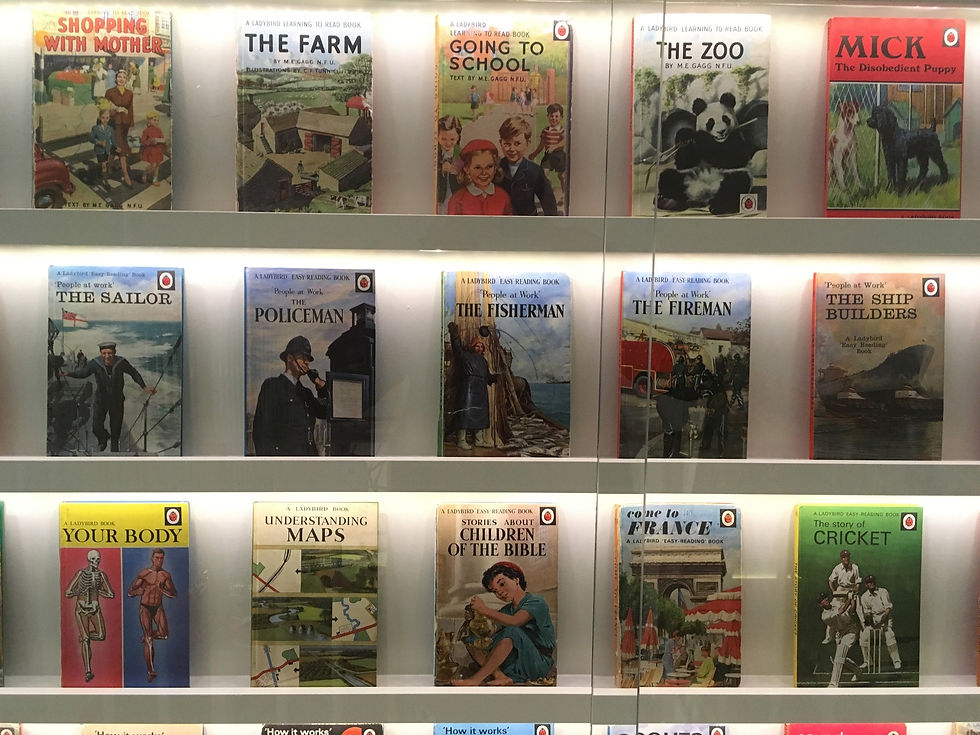
I had great joy discussing these and gleefully pointing these out, with another visitor who was here at the gallery. However there were books there, that I hadn't seen before or didn't recognise from it's visual style.


The timeline is a great visual indication of how the front covers and design has evolved, including the iconic ‘Ladybird’ logo. The use of the bold and simplistic Gill Sans, the fancy slab serif Claredon font and right through to my typographic favourite, the ‘read it yourself’ series. It is such a gorgeous and striking cover design. I fell in love with the way in which the series title dominates the cover with it’s hugely bold rounded letter forms and soft muted colours, contrasted with a strong black canvas. Beautiful!
There are also some original illustrations on show too and a proof sheet from the iconic ‘Nursery Rhymes’ first edition, which will excite you old-school designers. The artworks are truly exquisite.

This exhibition, shows how far Ladybird has come from its humble beginnings just over a century ago. From becoming a collectors’ passion to a publishing revival with Prince Charle’s recent Ladybird book on climate change. And not forgetting our British love affair with all things vintage, a never ending merchandising trend.

Incidentally, I feel the look and feel of 'Climate Change' is a great tribute to the golden age of Ladybird books from the 1940s-1970s, before photography and computers took over. The era of wonderful illustrators such as Robert Ayton, Charles Tunnicliffe and Martin Aitchison.
To me, the latter end of the 90s of their book cover designs had a cheap and mass market feel about them. Visibly forced to fit in visually (brand guidelines, Disney etc). I guess I am a romantic who loves nostalgia and craftsmanship too much.
Comments